

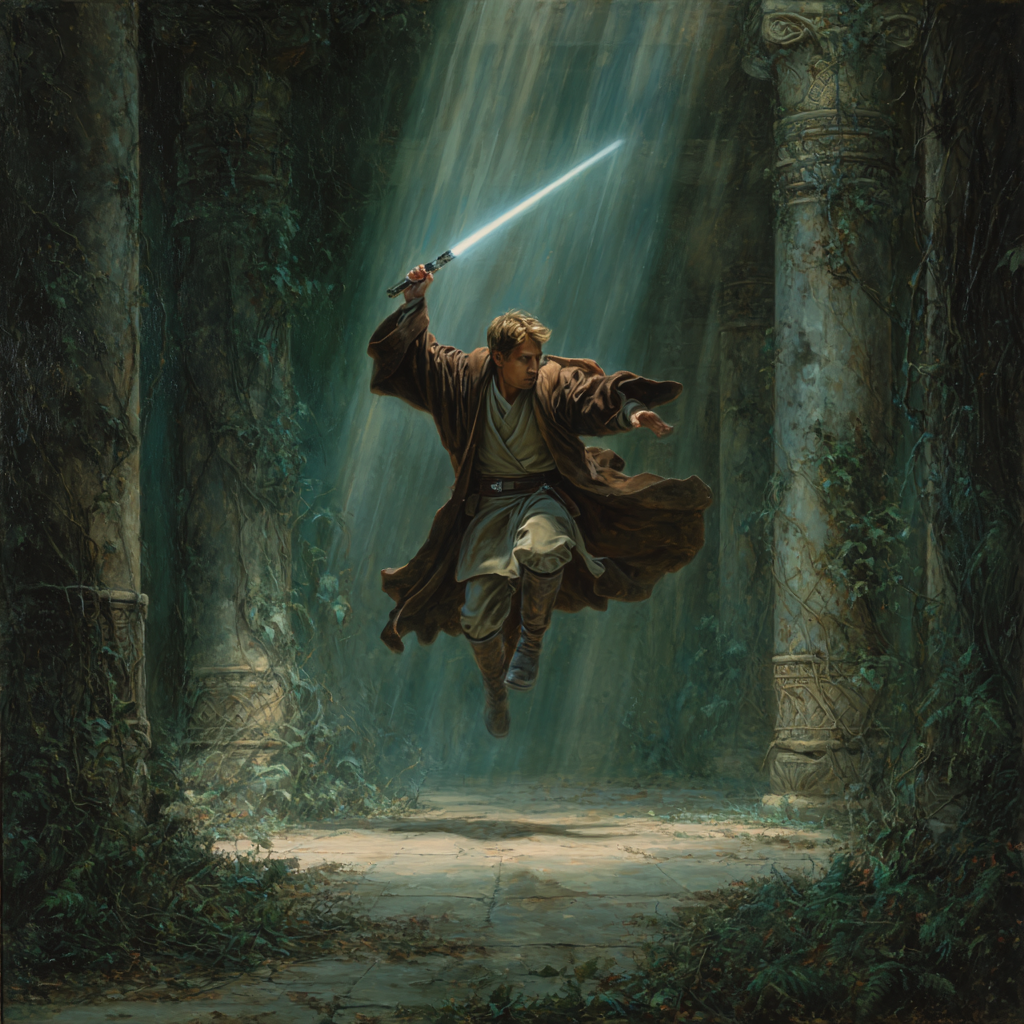
Quick Answers
- The seven lightsaber fighting styles form the foundation of all Jedi and Sith combat traditions, each built for different battlefield scenarios.
- Core System: 7 classical lightsaber combat forms (Shii-Cho → Vaapad)
- Combat Range: From defensive (Soresu) to aggressive (Juyo) extremes
- The main Star Wars lightsaber fighting styles are not just techniques—they reflect how each wielder thinks, reacts, and fights.
- Philosophy: Control, precision, aggression, or balance
- Examples: Obi-Wan (defense), Anakin (power), Yoda (mobility)
- Understanding lightsaber combat forms reveals why different duels feel completely different in pace and intensity.
- Dueling Fit: Eco/Baselit → structured practice & sparring. Neopixel → cinematic choreography & visual storytelling
Proof & Sources
The Art Behind the Blade
What makes one lightsaber duel feel calm and controlled, while another becomes fast, chaotic, and overwhelming?
The answer lies in lightsaber fighting styles. In Star Wars, lightsaber combat is not random movement or simple swordplay. It is a structured system developed over centuries, refined by Jedi and Sith to suit different philosophies and battlefield conditions.
Each Star Wars lightsaber fighting style represents a distinct approach to combat. Some emphasize defense and patience. Others rely on speed, pressure, or unpredictability. Together, they form a complete framework known as the lightsaber combat forms.
Understanding these forms reveals something deeper than technique. It shows how each wielder interprets power, control, and survival.
Form I – Shii-Cho: The Foundation
Shii-Cho is the earliest and most fundamental of all lightsaber combat forms. It focuses on broad, sweeping movements and basic attack patterns, making it ideal for beginners.
This form was developed during a time when Jedi frequently faced multiple opponents. As a result, Shii-Cho emphasizes crowd control rather than precision dueling.
While it may seem simple compared to later forms, Shii-Cho remains essential. Every advanced style builds on its core principles.
Form II – Makashi: Precision and Elegance
Makashi was designed specifically for lightsaber-to-lightsaber combat. Among all Star Wars lightsaber fighting styles, it is the most refined and technical.
This form focuses on balance, footwork, and precision. Instead of overwhelming opponents, Makashi users exploit small openings and maintain control throughout the duel.
Count Dooku is the most famous practitioner. His calm and controlled movements demonstrate how Makashi turns combat into a disciplined exchange rather than a chaotic fight.
Form III – Soresu: The Ultimate Defense
Soresu represents the defensive extreme of lightsaber fighting styles. It was developed in response to blaster-heavy combat, where Jedi needed to survive against ranged attacks.
The form emphasizes tight movements, minimal openings, and efficient energy use. Instead of attacking aggressively, Soresu practitioners wait for the right moment to respond.
Obi-Wan Kenobi exemplifies this approach. His mastery of Soresu allows him to outlast opponents, turning defense into a strategic advantage.
Form IV – Ataru: Speed and Mobility
Ataru focuses on agility and movement. Among all lightsaber combat forms, it is the most physically dynamic.
This style incorporates acrobatics, leaps, and rapid strikes. Practitioners rely heavily on the Force to enhance their speed and positioning.
Yoda’s combat style demonstrates the full potential of Ataru. Despite his size, his movements become unpredictable and overwhelming.
However, Ataru requires space and stamina. In confined environments, its effectiveness decreases significantly.
Form V – Shien / Djem So: Power and Control
Form V builds on defensive principles but adds offensive strength. It is divided into two variations: Shien, which focuses on deflecting blaster fire, and Djem So, which emphasizes direct counterattacks.
This form is often associated with dominance. Instead of waiting, practitioners push forward and apply pressure.
Anakin Skywalker is one of the most iconic users. His aggressive yet controlled style reflects the balance between power and discipline.
Among Star Wars lightsaber fighting styles, Form V represents a shift from survival to control.
Form VI – Niman: Balance and Versatility
Niman combines elements from multiple lightsaber combat forms into a balanced system. It is less specialized but more adaptable.
This form is often used by Jedi who focus on diplomacy or Force abilities rather than pure combat. It allows smooth transitions between techniques without committing to a single approach.
While it may not excel in extreme situations, Niman offers flexibility. It represents a practical choice for those who value balance over specialization.
Form VII – Juyo / Vaapad: Controlled Chaos
Form VII is the most intense of all lightsaber fighting styles. It channels aggression, unpredictability, and emotional intensity.
Juyo is the original version, characterized by chaotic and relentless attacks. Vaapad, developed later, attempts to control that aggression by channeling it through discipline.
Mace Windu is the most well-known Vaapad user. His ability to harness intensity without losing control makes the form both powerful and dangerous.
Among all Star Wars lightsaber fighting styles, Form VII walks the line between control and chaos.
How Fighting Styles Reflect Character
Each lightsaber combat form does more than define how a character fights—it reveals how they think. In Star Wars, combat is rarely just about technique. It becomes an extension of personality, shaped by discipline, emotion, and experience.
A Jedi like Obi-Wan Kenobi, for example, relies on patience and restraint, allowing his defensive style to wear down opponents over time. In contrast, Count Dooku approaches combat with precision and control, treating each movement as part of a calculated exchange. Meanwhile, fighters such as Yoda embrace mobility and unpredictability, using speed and positioning to overcome physical limitations.
These differences are not accidental. They reflect how each character understands conflict. Some prioritize survival, others dominance, and others balance. This is why lightsaber fighting styles remain so important—they transform combat into a form of storytelling, where every movement carries intention and meaning.
Read more: Top 5 Jedi Who Mastered the Forbidden Lightsaber Form
Choosing a Style in Practice
For fans and practitioners, these forms also influence how lightsabers are used in real life—whether in choreography, training, or cosplay.
A duel-ready lightsaber suits those practicing controlled sparring and structured movement. Meanwhile, Neopixel sabers enhance visual effects for cinematic interpretations of these styles.
Understanding Star Wars lightsaber fighting styles allows fans to connect more deeply with their own experience. Whether recreating a duel or simply appreciating the choreography, the forms provide a framework for engagement.
Why These Forms Still Matter Today
Even as Star Wars continues to evolve, the foundation of lightsaber combat forms remains relevant.
New characters may blend styles or create variations, but the original seven forms continue to influence every duel. They provide a structure that keeps combat meaningful and distinct.
For fans, learning about lightsaber fighting styles transforms how battles are viewed. Each movement becomes intentional. Each duel becomes a reflection of philosophy.
This is what makes lightsaber combat more than action—it becomes storytelling through movement.
👉 Explore more lightsabers here.
FAQs
What are lightsaber fighting styles?
Lightsaber fighting styles are structured combat systems used by Jedi and Sith.
How many lightsaber combat forms are there?
There are seven main forms of lightsaber combat.
Which form is the most defensive?
Form III, Soresu, is considered the most defensive.
Which form is used by Darth Maul?
Maul primarily uses a variation of Form VII with his saberstaff.
What is the most aggressive form?
Form VII (Juyo/Vaapad) is the most aggressive.
Which form does Obi-Wan use?
Obi-Wan Kenobi is known for Form III, Soresu.
Is there a balanced lightsaber form?
Yes, Form VI (Niman) focuses on balance and versatility.
Can users combine fighting styles?
Yes, many characters blend multiple Star Wars lightsaber fighting styles.
Why are lightsaber forms important?
They define combat philosophy and character identity.
Are these forms used in real life?
They inspire choreography and training but are adapted for practical use.
Join the Nsabers Community
Bring the Force into your world with Nsabers.
💬 We’d love to hear from you!
Share your thoughts by dropping a comment below or tagging us on social media.
May the Force be with you!


Leave a comment
All comments are moderated before being published.
This site is protected by hCaptcha and the hCaptcha Privacy Policy and Terms of Service apply.